
What Is SEO Marketing and How Does It Really Work?
Do you want to boost your online brand visibility to reach a wider target audience? Search Engine Optimization (SEO) is one of the best digital marketing strategies to drive organic web traffic to your website for higher conversion rates and consistent profits. SEO marketing has evolved over the past few years, to be precise, after the AI revolution.
If you want to rank on the top search pages on Google and other search engine platforms, your site’s content should align with targeted visitors’ intent and stay relevant to the topic.
To become a successful SEO wizard, we have compiled a comprehensive guide to help you understand everything about search engine optimization or SEO marketing, its importance, types, and strategies to improve SERPs of your website or online store in the cutthroat market.
Let’s Get Started!
What is SEO Marketing?
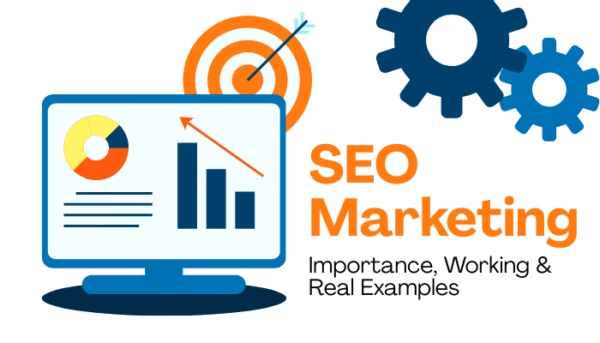
SEO marketing is a well-structured process of optimizing a website to achieve higher rankings on search engine results Pages (SERPs), such as Google, Yahoo, and Bing, to drive more organic (unpaid) traffic to your website. The goal is to enhance online visibility through the most relevant keywords and increase the site’s conversions and sales.
A website is optimized using organic practices, including keyword optimization, improving website speed, and creating high-quality and user-centric webpage content to keep your business at the top of Google search results.
How Does SEO Marketing Work?
Search engines use “crawlers” or “bots” to identify and collect information from web pages across the net. These are also known as automated programs in the technical domain. The process uncovers three critical stages, including:
- Crawling: In the first stage, crawlers or bots proceed with links to find new web pages and check for recent updates on existing ones. In simple words, it helps search engines to scan webpages, collect information, and find new links and content, and prepare them for indexing and ranking.
- Indexing: The search engine next analyzes the crawled website content (text, images, and videos) and stores it in a huge database. It is properly organized for quick and easy retrieval.
- Ranking: When a web user writes a search query, complex algorithms thoroughly assess hundreds of crucial factors, such as website performance, content quality, relevance, backlinks, mobile friendliness, and user intent, to determine the most authoritative web pages to rank at the top of SERPs. Fine-tuning website content and other aspects for targeted keywords is known as effective SEO marketing.
What Are the Key Components of SEO Marketing?
There is no rocket science behind search engine optimization. To understand the strategies between, let’s unveil its three core pillars:
On-Page SEO Marketing
The most crucial and primary aspect of search engine optimization marketing is on-page SEO. It is the process of optimizing your site’s content, such as images, text, and video, to let web visitors and search engines understand and easily navigate the published information.
Let’s make your web page content relevant to both web users and search engines. How? By understanding the following on-page SEO marketing strategies:
- Keyword Research: Every web page that appears on top of SERPs is related to one or more target keywords, also known as search queries. Ensure you find relevant keywords like the terms and phrases that your target audience uses to find products and other details online.
Use free tools like Ubersuggest or Ahrefs to conduct thorough market research and find keywords relevant to your niche, and assess your site to decide which keywords can work as a magic wand to gain higher online visibility.
- Top-Quality Web Page Content: Creating and publishing high-quality, user-relevant, plagiarism-free, and authoritative webpage content is a crucial part of on-page SEO marketing. Ensure your text, images, and videos on a website address the user’s intent.
- Metadata: It is the information within your web page’s HTML code, tagging, and label content, typically invisible to website visitors. It is created for search engine bots to crawl your website. Create descriptive title tags (50-60 characters) and meta descriptions (up to 160 characters) to help index your web pages quickly.
- HTML Optimization: To enhance your site’s code, structure, and loading speed, you’ll need to remove clutter, use proper tags, and fix errors. Ensure you organize header tags (H1, H2, H3, etc) that include target keywords to boost your website ranking.
- Image Optimization: There is a misconception that search engines only focus on a site’s written content, but they also crawl your images and other media. A good Image SEO focuses on optimizing a website’s images to boost its on-page SEO. Ensure you use descriptive file names, and adding relevant alt text boosts search visibility.
Off-Page SEO
Building a website’s strong reputation, credibility, and authority is as important as on-page optimization. When SEO activities are performed outside your website, such as creating quality blog posts or an interview with a professional in the same field, to boost other sites to link to yours, it increases SERPs. You’ll get a backlink that can boost your domain authority and online visibility on search engines. Key strategies include:
- Backlinks: It is a strategy to earn links from other reliable and top-quality websites to boost your topic authority and ranking potential. It is an act of endorsement, indicating to search engines that your content is valuable to target visitors.
- Domain Authority: When you develop content, build quality links, and increase your organic web traffic, it will directly boost your site’s domain authority. It measures the website’s credibility for search engines, and sites with high domain authority are more likely to rank on top of SERPs for relevant keywords.
- Social Media Marketing: Under this off-page SEO marketing technique, you’ll need to promote your unique and quality content on popular social media platforms, like Facebook, LinkedIn, Instagram, Pinterest, etc, to increase online visibility and brand awareness, generating more backlinks and organic web traffic.
- Online Reputation Management: Ensure you carefully manage customer reviews and brand mentions across the web to increase your credibility and reliable approach in the competitive digital domain.
Technical SEO
It is the most critical SEO marketing strategy that focuses on optimizing the underlying structure of a website to enhance search performance. Technical SEO targets on fixing site speed, boosting mobile friendliness, and optimizing the website for search engine crawlers.
- Website Speed: A website that takes longer than 3 seconds to load can lose its potential visitors while affecting the SERPs. So, focus on boosting page load times and giving a seamless user experience to your web visitors.
- Mobile Optimization: Did you know that over 60% of web traffic comes from mobile devices? Search engines prioritize those websites that offer a hassle-free mobile browsing experience. Ensure your website is fully responsive, enabling web page content to resize based on users’ screen sizes, touch-friendly design, and easy navigation. Google always uses mobile-first indexing.
- XML Sitemaps: Make sure you submit a sitemap to Google Search Console to help search engines find and index all web pages for higher ranking on search engine platforms.
Understanding the Importance and Benefits of SEO Marketing
Google is one of the driving factors
Google drives 63.41% of all US internet traffic, and 42% of online shoppers turn to search engines to research products. With search engines helping users discover brands, search is an important part of running a successful website.
Higher Organic Traffic: The right SEO marketing, both on-page and off-page, plays a pivotal role in boosting your ranking on search engine platforms like Google. This increases online visibility and attracts potential visitors searching for your products and services. It helps you drive more organic traffic towards your site.
Affordable Marketing Strategy: Unlike traditional or print marketing strategies, Search Engine Optimization is cost-efficient. However, it requires a lot of time, energy, and expertise to drive organic traffic. If you have a budget, try Google Ads and take your business to new heights of success.
Builds Credibility: There is no denying that websites that are listed at the top of Google search results are more trustworthy. Web users tend to consider such websites more credible and authoritative. They make quick buying decisions without a second thought.
Enhanced User Experience (UX): Since SEO marketing means improving site speed and making a site mobile responsive, this increases the overall user experience for your potential visitors. They can easily navigate through pages, click on buttons, and access web content easily, boosting the overall UX and conversion rates.
Examples of SEO Marketing For Better Understanding
Below are some examples of how to incorporate SEO into your marketing campaign:
Example of On-page SEO:
First things first, you need to optimize your content for a target keyword.
For example, if you are publishing a blog post about preparing green house cleaning products, your keyword might be ‘Green House Cleaners”. Now, you need to include in your post’s title, slug, meta descriptions, headers, and body.
Title: A DIY Guide to Preparing Green House Cleaners
Slug: /blog/green-house-cleaners-diy-guide/
Description: Ditch harmful store-bought cleaning products and prepare house cleaners using the following guide to tackle dirt and grime.
Headers: H2 What ingredients do I need to prepare Green House Cleaners?
H2- How to Make Green House Cleaners Like a Pro?
Examples of SEO Keywords:
In this example, your keyword is “Green House Cleaners.” This is an informational keyword.
Types of keywords based on intent:
- Informational: User wants information.
Example: “Green House Cleaners benefits” - Navigational: User wants a specific website.
Example: “Green House Cleaners website” - Commercial: User is comparing options.
Example: “best Green House Cleaners products” - Transactional: User wants to take action.
Example: “buy Green House Cleaners”
Examples of Off-Page SEO:
Off-Page SEO is all about building links from external websites to the webpage with your content. This helps you boost visibility via social media and other websites. Once you have published your article on your website, you can maximize backlinks by:
Sharing your article on Social Media Platforms. Write the post to engage comments:
Example: “Want to promote a healthy and breathable indoor environment? Check out the guide on preparing Green House Cleaners. If you have ever tried eco-friendly cleaning recipes, tell us in the comments below.”
Identifying external sites with your target audience. Encourage them to link to your content. Make sure you clearly define the benefits of doing this.
Example: “Hi [name], I loved your article on easy ways to go green at home. We just published a quick guide on Green House Cleaners, and it could be a helpful resource for your readers. Would you like to include it?”
Endnote
SEO marketing is more than just adding keywords to your blog post or article. It requires extensive research, expertise, and patience to ensure your website is ranked at the top of SERPs. The efforts behind driving organic traffic are called effective on-page, off-page, technical, and local SEO marketing. Hopefully! You’ve understood its role in today’s digital market domain and leverage the best strategies to generate higher web traffic for consistent growth.
Read More:
Frequently Asked Questions
How long does SEO take to show results?
A good SEO marketing takes 3 to 6 months, depending on your strategies, competition, content, and website quality. However, it is always good to be patient and focus on consistency.
What is the role of quality content in SEO Marketing?
Content is King in digital marketing. High-quality, unique, and informative website content, blog posts, articles, how-to guides, social media posts, etc, help search engines rank your website on top of their pages. However, it should include the target keyword, along with meta tags and headings.
What is SEM?
Search engine marketing, or SEM, involves creating relevant content on your website to attract ideal customers through paid search engine advertising. You can boost your traffic by creating new website pages or optimizing existing ones.
How SEO is Different from SEM?
Both are necessary, but they serve different purposes in increasing your website’s ranking on SERPs. Search engine Optimization, or SEO, uses on-page, off-page, and technical tactics to increase your organic web traffic, while SEM focuses on paid ads to boost your traffic and drive sales.
How to Get Started with SEO Marketing?
The process is quite simple:
- Do proper keyword research for your website. Choose keywords that people often use to search for products or information on Google.
- Write your web page using your keyword research data
- Optimize your page meta tags, i.e, title and descriptions
- Publish your page
- Create backlinks





About Author

Micky Joseph
Micky is a passionate blogger, who writes enriching posts on web design, web development and technology news. He loves writing about web development, tips, tools, tutorials, cloud, hosting, domain, and also sharing knowledge about latest technology news. He also writes about cms, programming language and various software. Follow us on FlipBoard.